A Day in the Life of a Product Engineer at Boneham & Turner
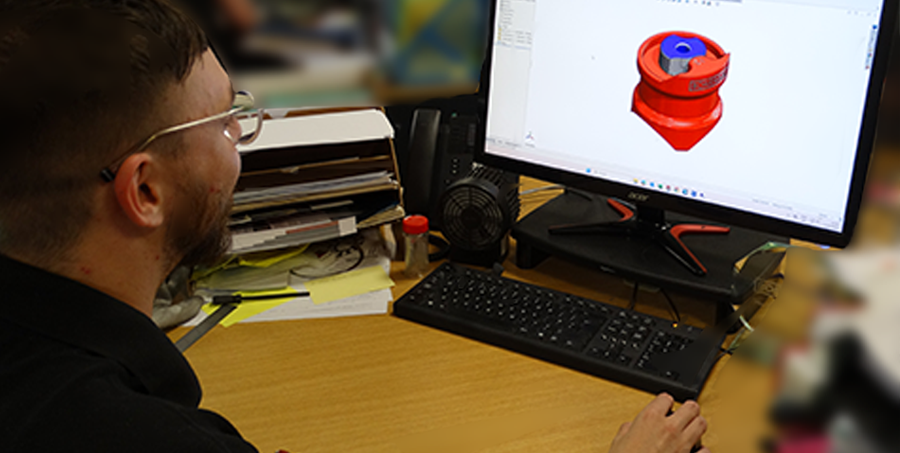
For Arran , Product Engineer at Boneham & Turner, no two days are ever quite the same, and that’s exactly how he likes it.
Balancing Innovation and Improvement
Arran’s role centres around three key areas: new product development, product improvements, and process improvements. His time is split between the office and the shop floor, giving him a complete view of how ideas evolve into finished components.
In the office, you’ll find him designing, researching, and creating drawings. On the shop floor, he works closely with machinists, monitoring processes, gathering machining data, and implementing improvements. This balance ensures that designs are not only innovative but also practical and efficient to manufacture.
Prioritising tasks can sometimes be straightforward — and sometimes more complex. With multiple projects running at once, there are occasions where Arran is waiting for feedback or production data. Rather than losing momentum, he uses that time to focus on another area of responsibility.
He also works closely with an Engineering Manufacturing Apprentice who now leads on manufacturing drawings and programming. As her skills develop, it allows them to collaborate more effectively and work on multiple projects simultaneously. When urgent, high-priority jobs arise, Arran carefully evaluates how delaying or advancing certain tasks will impact the business both in the short and long term before making a decision.
Tools of the Trade
Every day involves a core set of tools. Arran regularly uses SolidWorks for design, Excel for data analysis, and SAP for business and production processes. When reverse engineering parts or exploring new design improvements, he relies on precision measuring equipment such as micrometres and optical scanners to capture accurate data.
Problem-Solving at the Core
For Arran, engineering is fundamentally about problem-solving — but there’s no universal formula.
“How you solve a problem totally depends on what the problem is,” he explains. “It’s never a one-size-fits-all approach.”
However, the foundation remains the same: fully understanding the problem before attempting to solve it. Asking “Why?” is essential. By digging deeper, he can identify the root cause and clarify the true requirements of a design brief. Without that understanding, even the most technically sound solution can miss the mark.
Why Engineering?
Arran’s journey into engineering started at school when he chose Engineering as a GCSE subject simply because it sounded interesting. From there, he progressed through further qualifications while gaining hands-on industry experience.
Engineering may also run in his blood. He recently discovered that several members of his family in Glasgow worked at Rolls-Royce on the iconic Rolls-Royce Merlin engines. Even more inspiring, his grandmother was one of the first women in the country to earn an engineering degree — a pioneering achievement that adds an extra layer of meaning to his career choice.
The Challenges
One of the most challenging aspects of the role isn’t necessarily technical, it’s presenting ideas and solutions in front of others. Communicating complex concepts clearly and confidently is an important part of engineering, even if it doesn’t always feel like it.
Breaking the Misconceptions
A common misconception about engineering careers, Arran believes, is that you need straight A* grades to succeed.
While strong maths and physics skills can be important in some areas, many engineering skills are developed through application and experience. Engineering is a field of constant evolution, no one ever knows everything. In fact, Arran points out that you often learn more while working as an engineer than you do while studying to become one.
Advice for Future Engineers
Arran’s advice is simple but powerful:
“Take every opportunity to learn something new, even if it doesn’t seem directly relevant at the time. The skills you pick up along the way may prove invaluable in the future.”
For anyone considering a career in engineering, curiosity, persistence, and a willingness to keep learning may matter just as much as exam results.